
Profile portrait of a man in a white shirt against a light background

Logan Kim

Technical Sales Director

The most underestimated variable in DTF is powder

A good DTF print is not finished at the press True quality is defined by adhesion and structure that remain even after washing And in the end it is the powder that determines that standard

Green Fern
Profile portrait of a man in a white shirt against a light background

Logan Kim

Technical Sales Director

The most underestimated variable in DTF is powder

A good DTF print is not finished at the press True quality is defined by adhesion and structure that remain even after washing And in the end it is the powder that determines that standard

Green Fern

When people talk about DTF quality issues they usually look at the printer first
Printhead condition speed profile settings
All of these matter

But when you look closely at recurring problems in real production
a different pattern appears

Edges become rough
Fine bleeding occurs
Surface becomes uneven
Residue appears outside the printed area

And these issues do not completely disappear
even after changing printers or inks

The reason is simple
the problem often starts with the powder

Powder is introduced at the final stage of the process
so it is often treated as a simple consumable

But in reality it is the opposite

Powder defines the structure of the final result

Under heat it melts
connects ink to fabric
and determines the final surface properties and form

Where it sticks
where it does not
how it spreads
and what kind of surface it creates

All of this begins with the powder

If particle structure is not uniform
application becomes unstable

Powder spreads into unwanted areas
edges blur
and the print becomes dirty

If flow is not stable
results vary from job to job
and operators are forced to adjust constantly

If static is not controlled
powder scatters unpredictably
leading to contamination and inconsistency

All of this leads to one conclusion
the result is no longer controlled

At this stage many people suspect the printer

But in many cases
the instability has already started with the powder

If the print looks correct
but the result feels wrong
the difference often comes from the powder

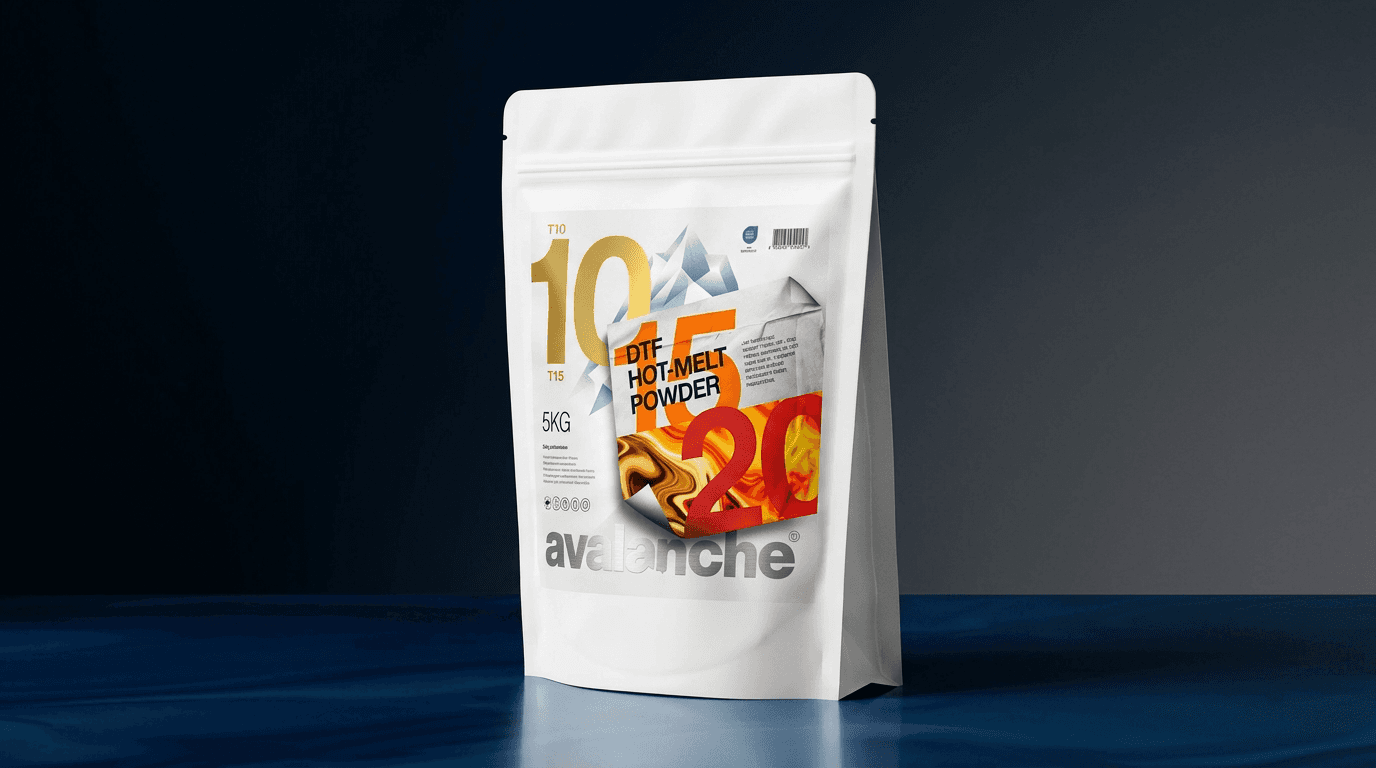
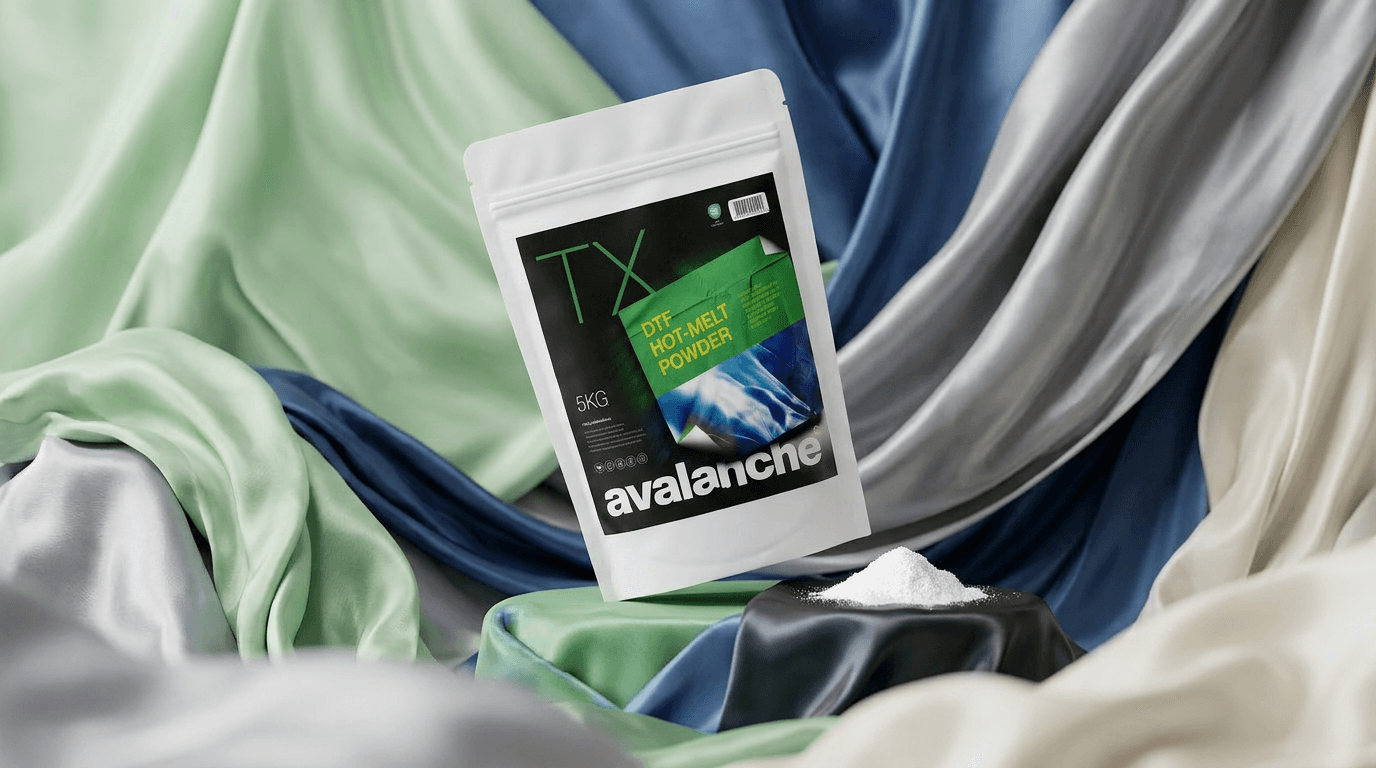
Avalanche starts from this exact point

We do not treat powder as something that simply melts well

We treat it as the element that defines the result

We control particle structure
stabilize flow
and reduce unwanted adhesion

So powder reacts only where it is needed
and stays away where it is not

The result is cleaner application
sharper edges
and significantly improved consistency

Good prints are not created by chance

It is not about adjusting conditions
It is about controlling structure

And at the center of that structure
is always the powder

When people talk about DTF quality issues they usually look at the printer first
Printhead condition speed profile settings
All of these matter

But when you look closely at recurring problems in real production
a different pattern appears

Edges become rough
Fine bleeding occurs
Surface becomes uneven
Residue appears outside the printed area

And these issues do not completely disappear
even after changing printers or inks

The reason is simple
the problem often starts with the powder

Powder is introduced at the final stage of the process
so it is often treated as a simple consumable

But in reality it is the opposite

Powder defines the structure of the final result

Under heat it melts
connects ink to fabric
and determines the final surface properties and form

Where it sticks
where it does not
how it spreads
and what kind of surface it creates

All of this begins with the powder

If particle structure is not uniform
application becomes unstable

Powder spreads into unwanted areas
edges blur
and the print becomes dirty

If flow is not stable
results vary from job to job
and operators are forced to adjust constantly

If static is not controlled
powder scatters unpredictably
leading to contamination and inconsistency

All of this leads to one conclusion
the result is no longer controlled

At this stage many people suspect the printer

But in many cases
the instability has already started with the powder

If the print looks correct
but the result feels wrong
the difference often comes from the powder

Avalanche starts from this exact point

We do not treat powder as something that simply melts well

We treat it as the element that defines the result

We control particle structure
stabilize flow
and reduce unwanted adhesion

So powder reacts only where it is needed
and stays away where it is not

The result is cleaner application
sharper edges
and significantly improved consistency

Good prints are not created by chance

It is not about adjusting conditions
It is about controlling structure

And at the center of that structure
is always the powder

Talk to a TPU Hot Melt Specialist

Tell us about your material and application. We help you optimize TPU hot melt performance, improve consistency, and eliminate guesswork in production.

Profile portrait of a man in a white shirt against a light background

Logan Kim

Technical Sales director

Extreme close-up black and white photograph of a human eye

Contact us

Talk to a TPU Hot Melt Specialist

Tell us about your material and application. We help you optimize TPU hot melt performance, improve consistency, and eliminate guesswork in production.

Profile portrait of a man in a white shirt against a light background

Logan Kim

Technical Sales director

Extreme close-up black and white photograph of a human eye

Contact us

Talk to a TPU Hot Melt Specialist

Tell us about your material and application. We help you optimize TPU hot melt performance, improve consistency, and eliminate guesswork in production.

Profile portrait of a man in a white shirt against a light background

Logan Kim

Technical Sales director

Extreme close-up black and white photograph of a human eye

Contact us